Fly in Chiang Mai by Gyrocopter or Ultralight
What it is really like to fly in Chiang Mai, from the airfield briefing to the rice fields and mountains seen from above.
By TPBLS Team
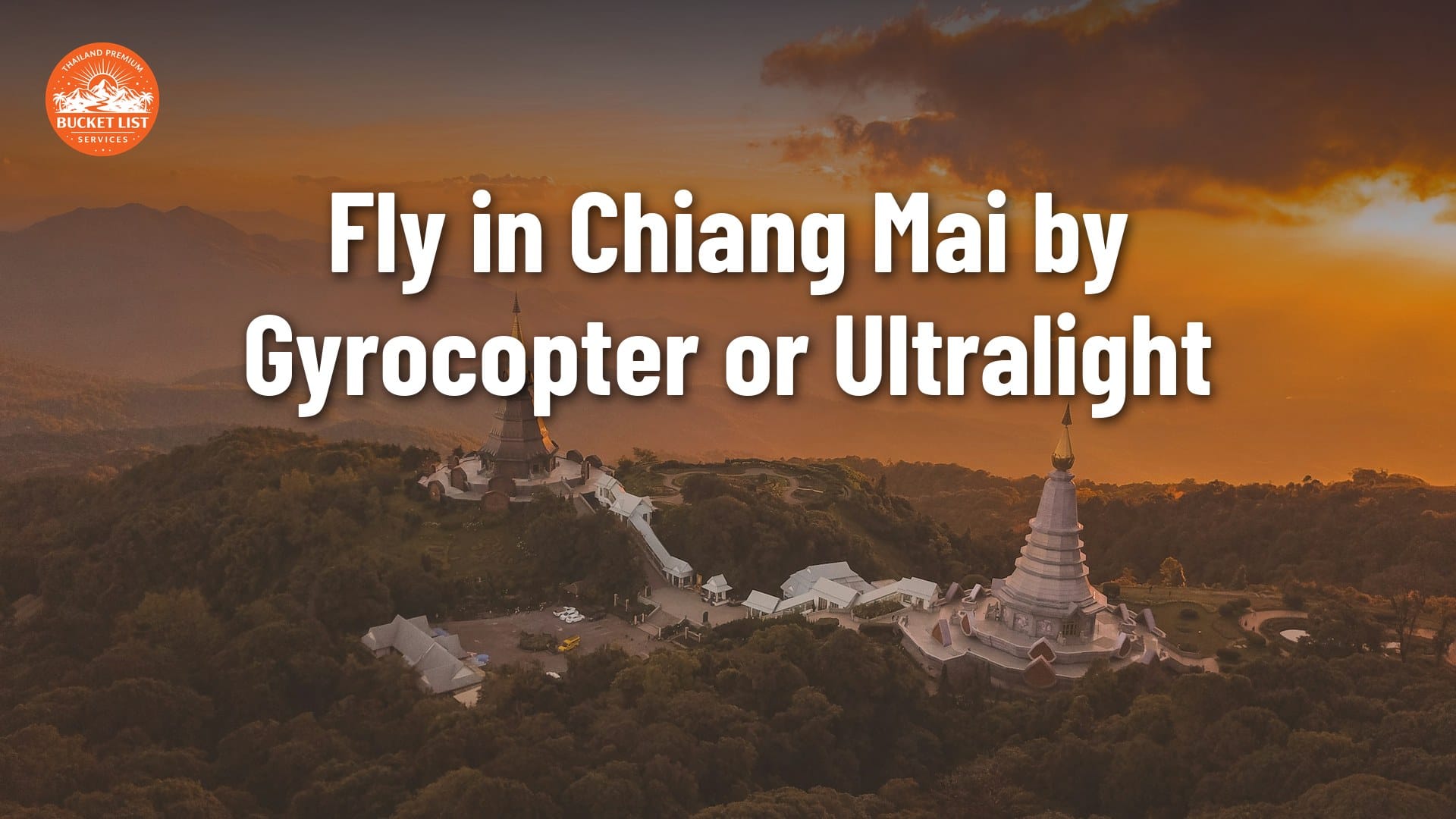
Fly in Chiang Mai and you trade temple queues and traffic for rice fields, mountain ridges and the whole city laid out below you. This guide walks you through what flying here actually involves: the aircraft you can take, how an introductory flight works from briefing to landing, what it costs, and the questions worth asking before you book a seat.
The flights run from a small airfield outside the city, and the experience is built for first-timers. No licence, no experience, no preparation: a licensed pilot flies, you ride, look and take photos. Everything below comes from the operator's own published flight and booking information, so what you read here is what you can expect on the day.
Key takeaways
- Introductory flights from the airfield near Chiang Mai run by gyrocopter or ultralight, with a licensed pilot flying and you as the passenger.
- Flights are sold in 15, 30 and 45 minute lengths from 4,590 THB per person, including briefing, insurance and refreshments in the hangar.
- Passengers must be at least 12 years old and weigh between 30 and 100 kg; flights run year-round, weather permitting.
- A gyrocopter's rotor keeps turning even if the engine stops, which lets the aircraft glide to a controlled landing.
- The cool, dry months from November to February give the clearest views of Doi Suthep and the surrounding mountains.
What does it mean to fly in Chiang Mai?
To fly in Chiang Mai is to take an introductory flight in a small aircraft, usually a gyrocopter or an ultralight, from an airfield just outside the city. A pilot with a licence from the Civil Aviation Authority of Thailand flies the machine; you sit beside or behind them and see northern Thailand from between 500 and 2,000 feet.
The word "introductory" matters. These flights exist to give people a first taste of flying, not to train you as a pilot during the ride. The pilot handles everything, from the pre-flight walk-around to the landing. Your job is to arrive 30 minutes early, listen to the safety briefing, and enjoy it.
Gyrocopter or ultralight: what is the difference?
A gyrocopter looks like a small helicopter without powered rotors. An unpowered rotor on top spins as air flows through it while a propeller pushes the aircraft forward. Aviation references such as the autogyro entry on Wikipedia trace the type back to the 1920s, and university aerodynamics course material from Embry-Riddle explains how autorotation works: the rotor is driven by the airflow, not by the engine.
An ultralight is a tiny fixed-wing aeroplane. It is lighter than a gyrocopter and flies lower and slower over the fields. On the airfield near Chiang Mai, the ultralight introductory flight describes typical heights of 500 to 1,000 feet, while the gyrocopter flies higher, around 1,000 to 2,000 feet.

Why fly here rather than anywhere else?
Chiang Mai packs more variety into one flight than almost any city in Asia. Within minutes of takeoff you can be over green rice paddies, small villages and fish ponds, with the Doi Suthep mountain range holding one side of the horizon. The city itself, the moat, the golden temple on the mountain, sits right at the edge of the countryside, so a short flight shows you both.
Season matters here. Northern Thailand has three rough seasons, and the climate data for Chiang Mai collected by Climatestotravel shows the pattern: a hot stretch from March to May, a rainy monsoon from May to October, and a cool, dry season from November to February. Lonely Planet's guide to the best time to visit Chiang Mai calls the cool season the city's peak travel window, and that is exactly when flying conditions are at their best: clear mornings, light wind, long views. The rainy season still flies, but flights cluster early in the morning before the afternoon clouds build.
Burning season, roughly February to April, is the one period regular visitors learn to work around. Smoke haze can sit over the valley and dull the view, and it is worth asking the operator how conditions look before you lock in a date.
How the flight works, step by step
Booking and confirmation
You pick a date and a flight length on the website, send the request, and the team confirms your slot on WhatsApp within 24 hours. Nothing is paid at that point: the booking is "book now, pay later", and payment is settled once everything is arranged.
The pre-flight briefing
Arrive at the airfield 30 minutes before your slot. The pilot walks you through the aircraft, the safety equipment and the route. You get a flight suit and a helmet, and the briefing covers where you will fly, what you will see and how to communicate over the headset.

Takeoff, the flight itself and landing
Gyrocopters roll down a runway on wheels and lift off in a short distance; the takeoff feels quick but calm. Once at height, the pilot follows the planned route over the rice fields, villages, golf courses and lakes around the city, with Doi Suthep in view on clear days. The pilot can point out landmarks and adjust the flight so you get photos. Landings in a gyrocopter are famously short and gentle.
Afterwards there is coffee and snacks in the hangar, and photos can be arranged on request. A GoPro records the flight, and the footage is yours to keep.
What it costs and what is included
The published prices on the introductory flights page are 4,590 THB per person for a 15-minute flight, 7,590 THB for 30 minutes and 10,590 THB for 45 minutes. The price includes the safety briefing, full passenger and third-party insurance, coffee and snacks after the flight, association and site fees, fuel and maintenance, and the GoPro flight video.
Insurance cover is THB 1,000,000 per flight, and the operator publishes a Department of Tourism licence number (24/01379) alongside the pilot's credentials. If those figures change before your visit, the flights page is the source that stays current.
Who can fly, and what are the limits?
Passengers must be at least 12 years old and weigh between 30 and 100 kg. Bring a passport or Thai ID, and wear closed-toe shoes. Flying is not permitted for pregnant women or anyone with a heart condition, and the published safety briefing lists the remaining restrictions. One passenger flies at a time with a dedicated pilot, which is why couples take turns rather than sharing a single aircraft.
Weather is the other limit. Slots can shift by 15 to 20 minutes depending on conditions, and if the weather does not allow safe flying you can rebook at no charge or take a full refund. Free cancellation up to 24 hours before your flight applies as well, so a flight booked for the wrong morning does not cost you the ticket.

How to get started with your first flight
- Choose your aircraft and flight length: 15, 30 or 45 minutes, by gyrocopter or ultralight.
- Pick your window: morning and late afternoon slots run year-round; November to February gives the clearest air.
- Send the booking request on the flights page and wait for the WhatsApp confirmation, normally within 24 hours.
- On the day, arrive 30 minutes early with your passport or Thai ID, closed-toe shoes and sunscreen.
- After landing, collect your GoPro footage over coffee in the hangar.
If you are planning a longer trip, our Chiang Mai bucket list puts a flight alongside the rest of the city's signature experiences.
Conclusion
To fly in Chiang Mai is the simplest way to change how you see the city: one introductory flight, one licensed pilot, and the rice fields, mountains and temples of Northern Thailand spread out below you.
The decision comes down to timing and flight length. Book the cool season from November to February for the clearest views, choose 30 or 45 minutes if you want the mountains as well as the fields, and keep the morning slot as your first choice in the rainy months.
Thailand's Premium Bucket List Services runs introductory flights by gyrocopter and ultralight from the airfield near Chiang Mai, with published prices, insurance and licensing details on the flights page, and confirmation by WhatsApp within 24 hours.
Frequently asked questions
Is flying in a gyrocopter safe?
Gyrocopters are considered very stable aircraft. The rotor keeps spinning even if the engine stops, so the machine glides down and lands in a very short distance. That said, safety depends on the operator: ask for the pilot's licence, the insurance cover and the maintenance routine before you book, as the operator's own booking checklist recommends.
How much does an introductory flight cost?
The published prices are 4,590 THB per person for 15 minutes, 7,590 THB for 30 minutes and 10,590 THB for 45 minutes, including briefing, insurance, refreshments and the GoPro flight video. Prices are confirmed at booking; check the flights page for the current figures before you plan.
Do I need a licence or experience to fly?
No. An introductory flight is flown entirely by a licensed pilot, and passengers need no experience at all. You need to be at least 12 years old, weigh between 30 and 100 kg, and bring a passport or Thai ID on the day.
When is the best time to go flying?
Flights run all year, weather permitting, but November to February is the sweet spot: cool, dry air and the clearest views. In the rainy season, mornings are the most reliable window, and in the February-to-April burning season, haze can soften the view across the valley.
What happens if the weather is bad on the day?
Flight times can move by 15 to 20 minutes depending on conditions. If the weather does not allow safe flying, you can rebook at no charge or take a full refund, and free cancellation up to 24 hours before the flight applies in any case.
Can children or older travellers fly?
Children from 12 years old can fly, and there is no upper age limit published; the limits that matter are the weight range of 30 to 100 kg and the health restrictions such as pregnancy or heart conditions. Anyone between 12 and their mid-teens counts as a minor, so expect the team to ask a parent or guardian to confirm the booking.
Can I bring a camera or phone?
Yes, and the aircraft carries a GoPro that records the whole flight; the footage is yours to keep. For phones, use a strap or lanyard, because the open cockpit turns anything loose into a launch item at takeoff. Photos can also be arranged on request.
See Chiang Mai from the air
Gyrocopter introductory flights with a licensed pilot, from 4,590 THB per person. Pick a date and a time, pay later.